On the ABA Waitlist? What Parents Can Do in the Meantime
This article may contain affiliate links. Learn more
Somewhere between the diagnosis and the first therapy session, most autism parents meet the waitlist. You call the provider, you fill out the forms, and someone cheerfully tells you the current wait is six months. Sometimes longer.
It's a maddening stretch. You've been told early support matters, and now you're sitting on your hands.
Two things are worth saying up front. First, the wait doesn't have to be dead time. Second, ABA is one option among several, not the automatic answer for every autistic child. Both points matter when you're deciding how to spend the next few months.
A fair look at ABA
Applied behavior analysis is the most widely funded autism therapy in the United States, which is why the waitlists are so long. It uses structured teaching and reinforcement to build specific skills, and some children make real gains with it, particularly in early communication and daily living skills.


It also has serious critics, including many autistic adults, and their concerns deserve a hearing. Older, compliance-focused approaches were harsh, and some people describe lasting harm. Practices today vary widely from one provider to the next. A program that respects a child's signals and works toward meaningful goals looks very different from one that drills for obedience.
What that means for parents:
- ABA isn't for every autistic child. Some kids thrive with it. Others get more from different supports, or from a different approach at a different time.
- It isn't a catch-all. It can teach skills, but it doesn't address everything, and it isn't a cure or a substitute for understanding your child.
- It works best with a defined scope. Many families and clinicians treat it as time-limited, with clear goals and regular reviews, rather than an open-ended commitment. Some families set a horizon of roughly 18 to 24 months and reassess from there. That's a framework, not a rule, and your child's team should help you decide what fits.
Things parents can try while you wait
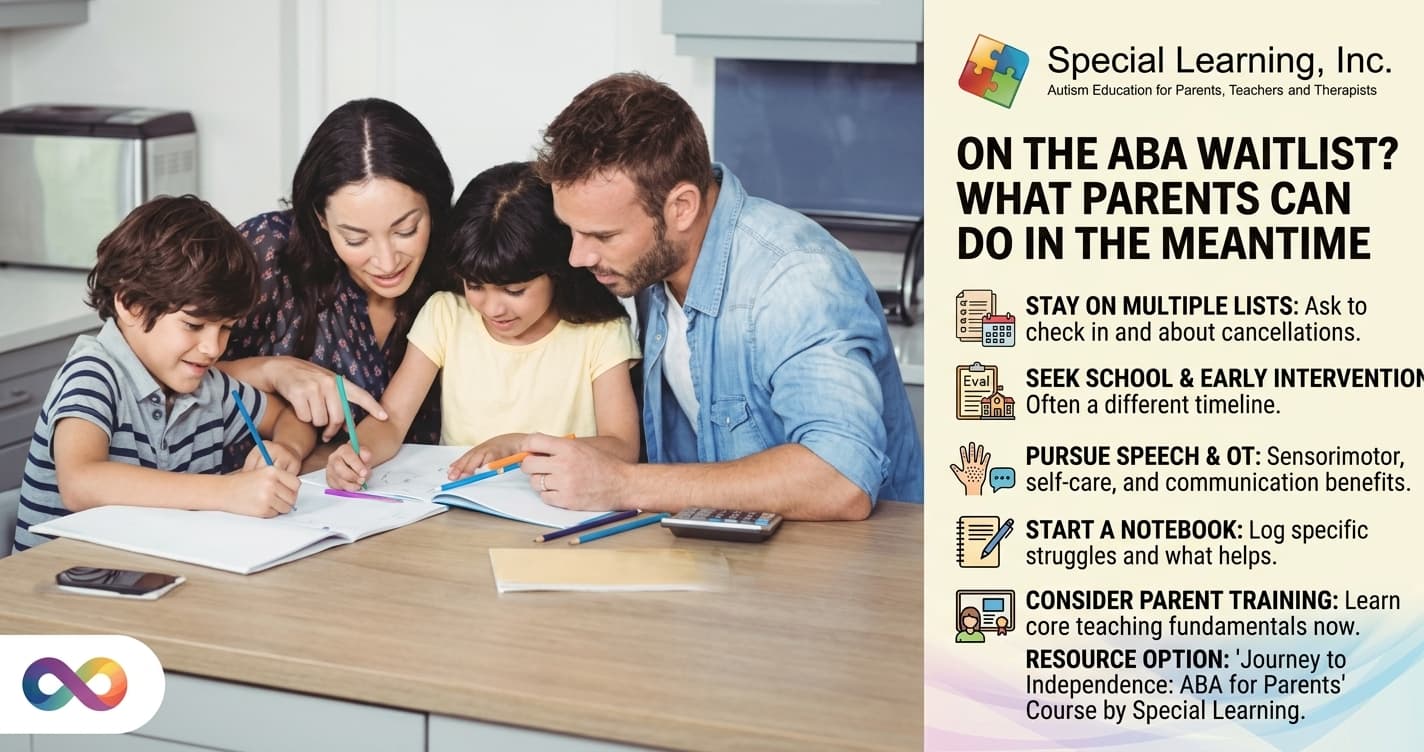
Stay on the list, and add more. Ask to be placed on more than one waitlist. Ask how often you should check in and whether cancellations happen.
Ask for other evaluations. Your school district can evaluate a child for special education services, and early intervention programs exist for younger children. These often move on a different timeline from private therapy.
Look at speech and occupational therapy. These are often available sooner and can address real needs. OT, for example, can help with sensory regulation, fine motor skills, self-care routines like dressing and eating, and the sensory pieces that make everyday life harder. Many parents find OT makes an immediate difference at home, and it's worth asking about even if you're also pursuing ABA. Speech-language therapy is worth a look if communication is a concern.
Consider relationship-based approaches. Some families look at play-based, child-led models, which focus on connection and following the child's interests rather than drilling skills. These aren't a fit for everyone either, but they're part of the picture.
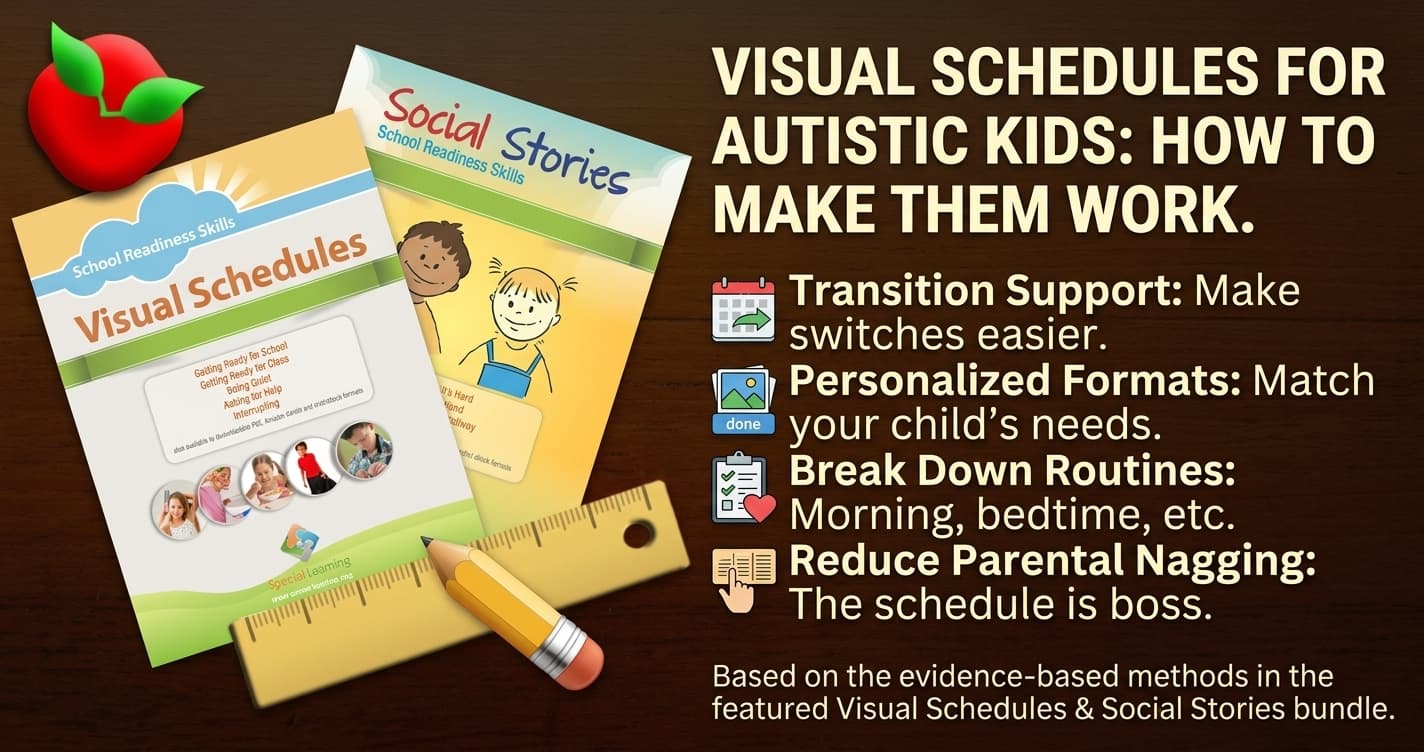
Build supports at home. Visual schedules, predictable routines, and clear, simple language cost little and help many kids.
Start a notebook. Write down what your child struggles with, when, and what helps. A provider can do more with specifics than with general impressions, and you'll be clearer about what you want the therapy to accomplish.
Learn the basics. Understanding how reinforcement, prompting, and skill-building work makes you a better partner to any therapist, and helps you spot a program that isn't a good fit.
When a structured resource may help
There's a difference between sitting on a waitlist and using it. A structured parent training program can help you learn core teaching strategies now, so you're not starting from zero on day one of therapy. It may make sense if:
- You want to do something concrete instead of waiting
- You'd like to understand the vocabulary and methods before you meet a provider
- You want to reinforce whatever therapy your child eventually gets at home
- Your wait could be long, or your access to services is limited
A course like this isn't a replacement for a qualified clinician, and it shouldn't be treated as one. Think of it as preparation and practice, not treatment.
A resource worth a look
Full disclosure: Autisable is an affiliate partner of Special Learning. If you buy through the link below, we may earn a commission at no extra cost to you. We only mention resources we think fit the topic.
Special Learning offers Journey to Independence: ABA for Parents ($129), a training program aimed at parents who are waiting on ABA services. If you want to use the waitlist to learn the fundamentals, it's worth a look. As with any program, consider it alongside your child's own needs and your provider's guidance.
The short version
A long waitlist is frustrating, but it's not wasted time. Stay on multiple lists, look into school evaluations, and ask about OT and speech, which are often available sooner and can make a real difference. Build simple supports at home and keep notes. ABA can be useful for some children, especially with clear goals and a time frame, but it's not the only path and it's not right for everyone. If you'd like to learn the basics while you wait, a structured parent training can give you a head start.



Disclosure: Autisable.com participates in affiliate programs, including the Amazon Services LLC Associates Program and other affiliate advertising programs. This means we may earn commissions from qualifying purchases at no additional cost to you.
Comments
Join the community to leave a comment.