Getting Ready for School: Preparing an Autistic Child for the First Day
This article may contain affiliate links. Learn more
The school supply list is easy. Pencils, glue sticks, a backpack that will be wrecked by October. You can knock that out in one trip.
The harder part is the invisible list: sitting in a group, waiting a turn, following directions from a stranger, asking for help, and getting through a day where nothing happens in the order it happens at home.
For an autistic child, that invisible list can feel very long. The good news is that most of it can be practiced ahead of time, and a good chunk of the preparation is about the school, not just the child.
First, a word on "readiness"
Parents sometimes hear that a child has to be "ready" before starting school. That framing deserves some pushback. Public schools are generally expected to serve children where they are, with supports, rather than requiring a child to arrive with a checklist completed. In the U.S., that expectation is backed by special education law, and the specifics vary by state and district.
So think of readiness skills as things that will make the transition smoother, not entry requirements. Your child doesn't need to master everything. You're aiming for a softer landing.
What tends to matter most
Every child is different, but these areas come up again and again:
- Communicating needs. Being able to show or say "I need a break," "I need help," "bathroom," or "I'm hungry," by whatever method works for your child.
- Routines and transitions. Moving from one activity to the next, lining up, and shifting from preferred to non-preferred tasks.
- Group participation. Sitting near others, taking turns, and following group directions.
- Self-care. Toileting, washing hands, handling a lunch, and managing a coat or backpack.
- Attention and waiting. Staying with an activity for a short time and tolerating a wait.
- Separation. Handling drop-off and being away from family.
- Sensory tolerance. Managing noise, crowds, lights, smells, and unfamiliar textures.
You'll likely see that some of these are strengths and some are work-in-progress. That's normal, and it's useful information for the school.
Things parents can try
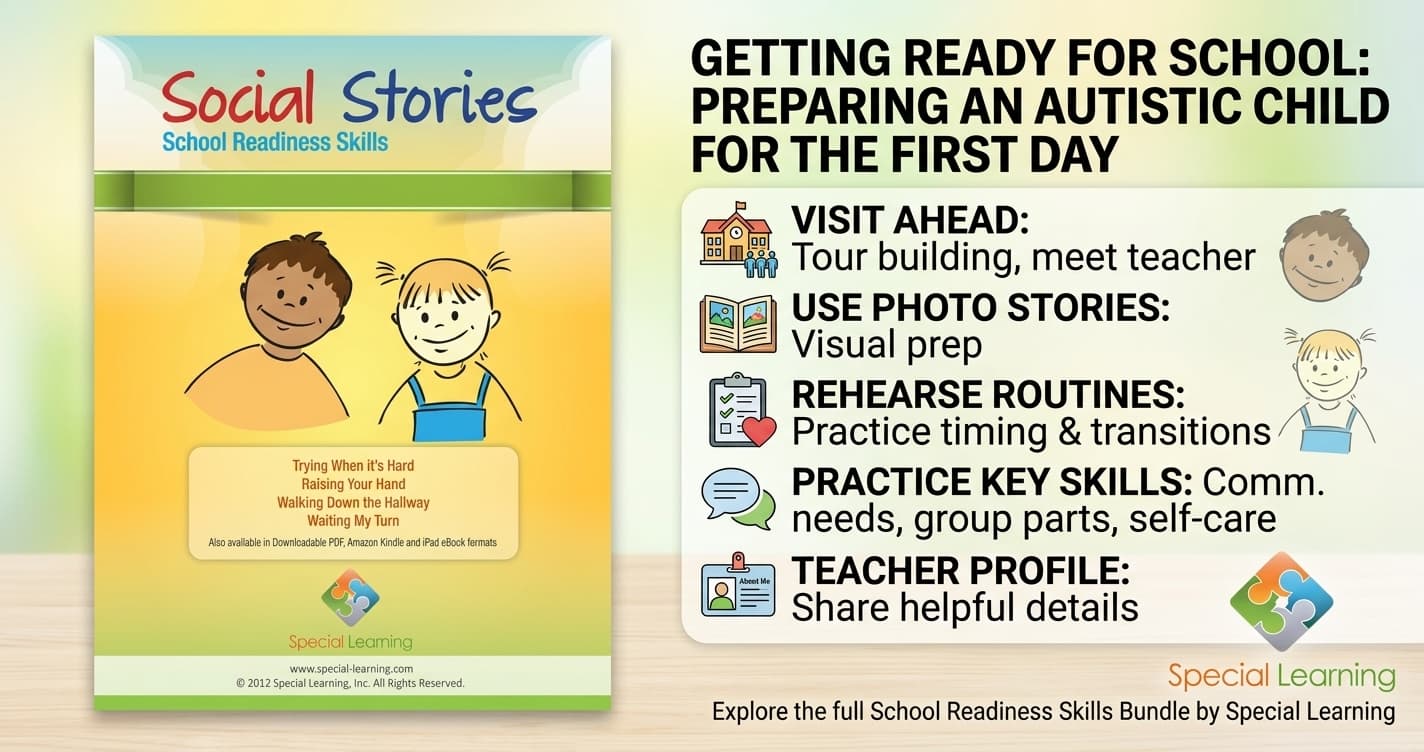
Visit before the first day. If the school allows it, tour the building, see the classroom, find the bathroom, and meet the teacher when it's quiet. Take photos to use later.
Make a simple photo book or story. Pictures of the building, the classroom, the teacher, and the bus, with a few short sentences about what will happen. Read it often in the weeks before.
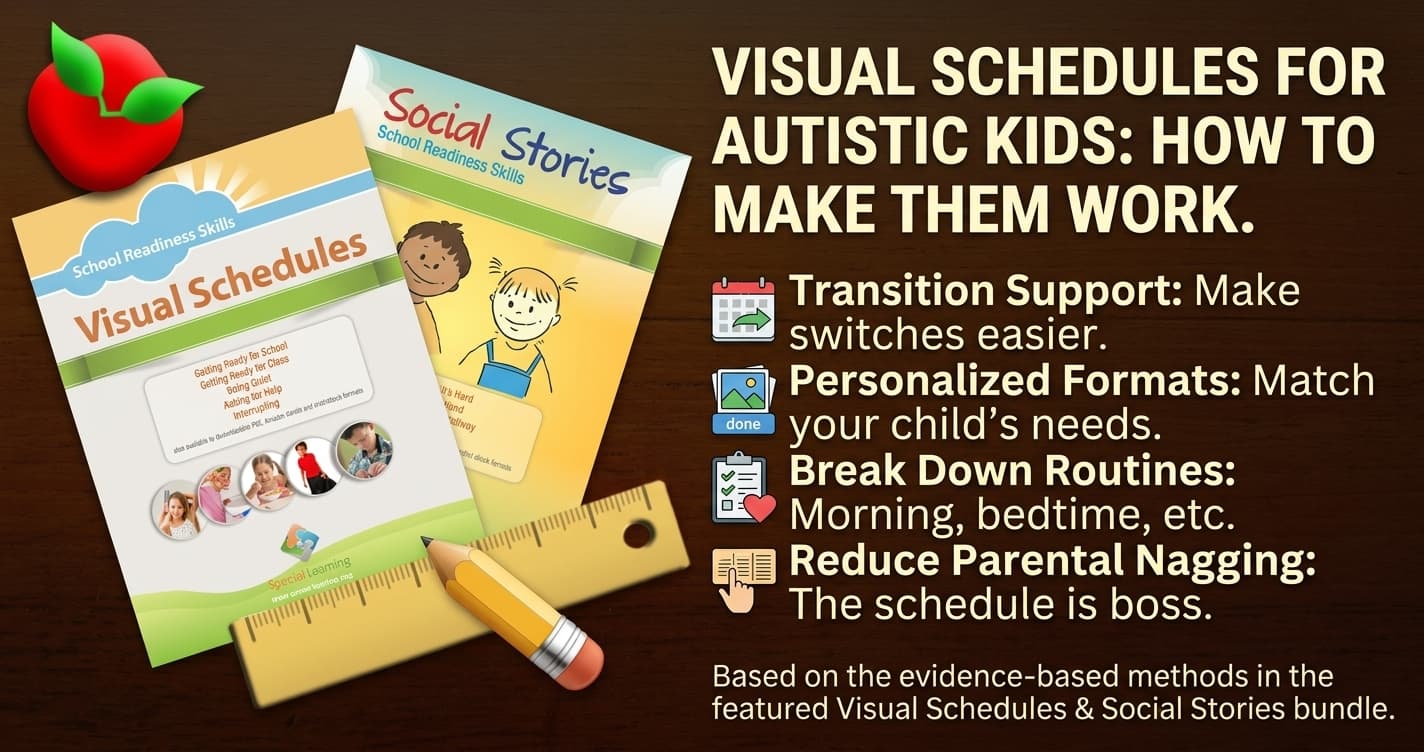
Rehearse the routine. In the week or two before school starts, shift bedtime and wake-up times, practice the morning sequence, and try a short "pretend school" session at the table. A visual schedule for the morning helps a lot.
Practice one skill at a time. Pick the one or two that will matter most, such as asking for a break or handling lunch items, and work on those rather than everything at once.


Write a one-page "about my child" profile. Include what helps, what upsets them, how they communicate, sensory triggers, favorite things, and what a good day looks like. Hand it to the teacher. Teachers usually appreciate this more than parents expect.
Ask about supports early. If your child has an IEP or is being evaluated, find out what services will be in place at the start. If they don't have one yet, ask the school about the evaluation process. The earlier you start those conversations, the better.
Talk to the teacher about communication. Agree on how you'll share information, such as a daily notebook, email, or a quick check-in, and what will happen if things go badly.
Plan for the after-school crash. Many autistic kids hold it together at school and fall apart at home. Build in downtime, a snack, and a quiet space, and don't schedule much for the first few weeks.
Keep expectations flexible. The first weeks are for learning what works. A rough day isn't proof the placement is wrong.
When a structured resource may help
Some parents know exactly which skills to work on. Others feel like they're guessing. A structured program can help if:
- You're not sure which skills matter most for a classroom
- You'd like a clear sequence for teaching them
- You want materials you can use at home that mirror what the school will expect
- Your child needs more explicit teaching for the basics, like following group directions or waiting
A skills program isn't a substitute for the school's evaluation or your child's team. It's a way to build a foundation at home, at your child's pace.
A resource worth a look
Full disclosure: Autisable is an affiliate partner of Special Learning. If you buy through the link below, we may earn a commission at no extra cost to you. We only mention resources we think fit the topic.
Special Learning offers a School Readiness Skills Bundle ($39.99), a collection of materials aimed at building skills for starting school. If you'd like a structured place to begin instead of building your own practice materials, it's worth a look.
The short version
Starting school goes better with some preparation, but your child doesn't have to be "ready" to belong there. Visit ahead, use photos and simple stories, rehearse the routine, share a profile of your child with the teacher, and work on a couple of key skills instead of all of them. Keep expectations flexible, and expect some rough patches while everyone settles in. If you'd like a structured set of materials to practice with, a skills bundle can help.



Disclosure: Autisable.com participates in affiliate programs, including the Amazon Services LLC Associates Program and other affiliate advertising programs. This means we may earn commissions from qualifying purchases at no additional cost to you.
Comments
Join the community to leave a comment.