The Meet-the-Teacher Visit, Done the Way Autistic Kids Need
This article may contain affiliate links. Learn more
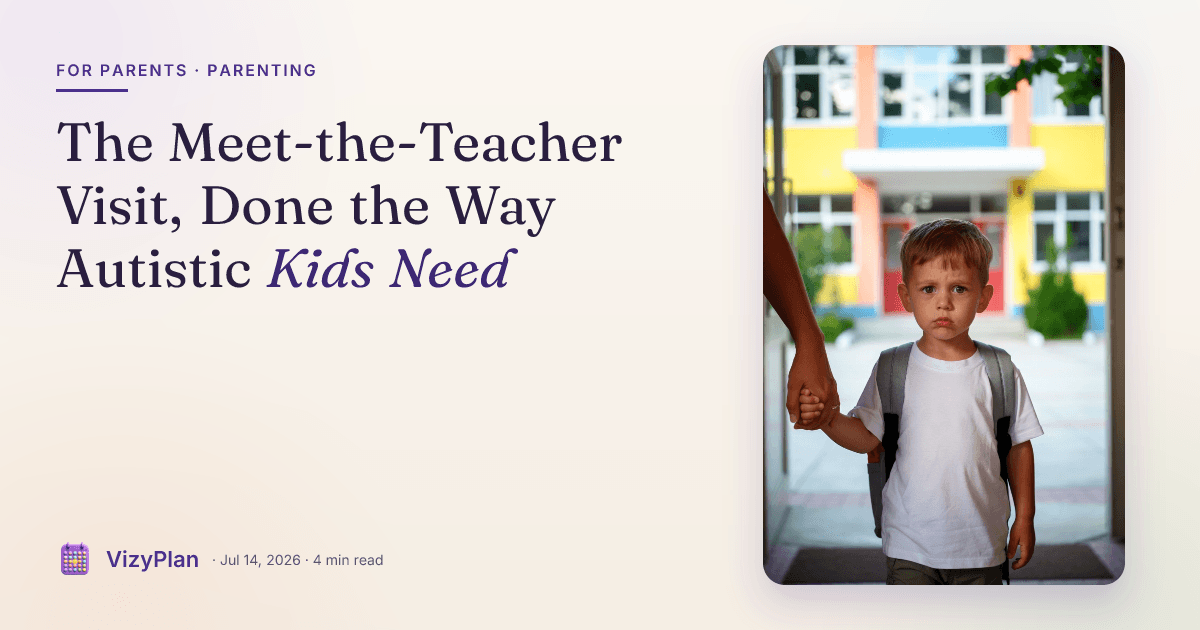
The standard meet-the-teacher visit is one evening, in a hot room, with forty families talking at once and a teacher trying to greet all of them. For a lot of autistic kids, that format delivers the sensory load of a birthday party and almost none of the information they actually needed. A meet-the-teacher visit can genuinely lower first-day anxiety, but usually not in the shape the school offers it. The version that works is quieter, shorter, and repeated.
Advance exposure is a real strategy, not just a nicety
Preparing a child in advance is among the better-supported ideas in autism practice. The third-generation evidence review in the Journal of Autism and Developmental Disorders identified 28 evidence-based practices, and social narratives, video modeling, visual supports, and antecedent-based interventions are all among them. Those four are the exact toolkit for a school visit.
The direct evidence for the visit itself is thinner, and worth naming honestly. A small qualitative study of six autistic students and their parents found pre-transition visits were central to reducing anxiety, and most students visited more than once. Six families is not a large evidence base, but it matches what a study of three children found about previewing a situation in advance. Show them the thing before the thing.
The relationship outlasts the room tour
There is a bigger reason to go. A meta-analysis of 117 studies in the Review of Educational Research found family-school partnership interventions improved children's social-behavioral competence and mental health, and the components tied to positive outcomes were the relational ones: communication, collaboration, and the parent-teacher relationship itself. You are not there to find the cubbies. You are there to start a working relationship with the adult who gets six hours a day with your child.
How to run the meet-the-teacher visit
Ask for a quiet slot instead of the open house. Ten minutes in an empty classroom beats an hour in a packed one.
Go more than once if you can. Short and repeated beats long and singular.
Take photos while you are there. The door, the desk, the bathroom, the drop-off spot. Photos become the social story.
Walk the parts that are not the classroom. Hallways, the bus loop, and the lunchroom are where the hard moments live.


Hand the teacher one page, not your whole history. What calms your child, what escalates them, and how to reach you.
Turn the photos into something they can revisit
The visit works best when it does not end at the visit. A short visual walkthrough your child can look at on their own, as often as they want, is where the priming compounds. Our post on the one-page profile for a new teacher pairs directly with this one.
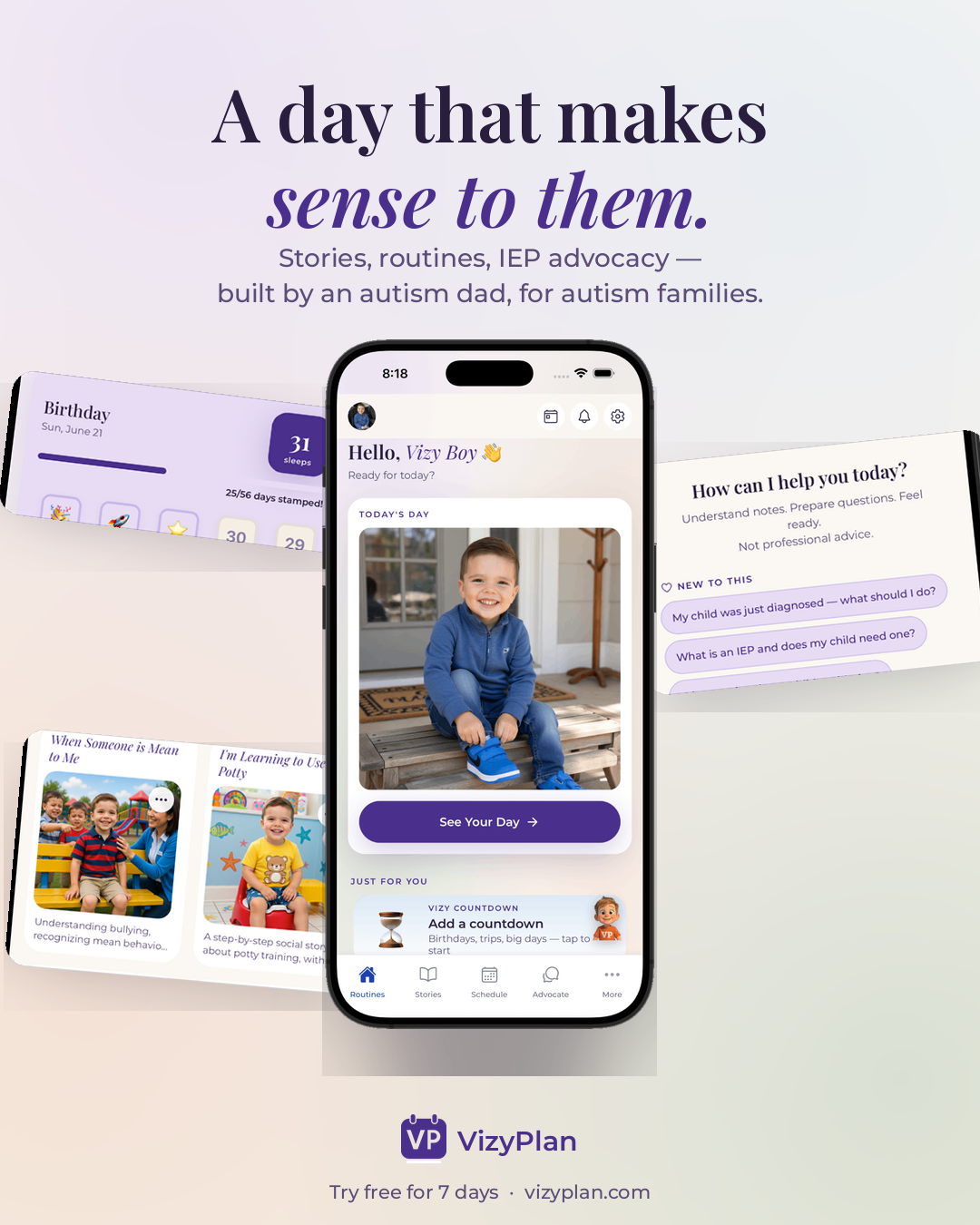
VizyPlan was built by an autism dad and a licensed speech-language pathologist so those photos become a routine your child can walk through before day one ever arrives.
Download VizyPlan and start your 7-day free trial today. Turn a school visit into a routine your child can rehearse. Just $6.99/month after your trial, no credit card required upfront.
VizyPlan was built by an autism dad and a licensed speech-language pathologist who needed something that did not exist. Start your free trial.

This post was originally published elsewhere. Read the original post →
Article by
Justin Bowman
VizyPlan was created by a father who was frustrated by scattered tools and systems that added stress instead of reducing it. He built what his family needed: a simple way to help his family navigate each day with confidence. For more information, check out https://vizyplan.com

Disclosure: Autisable.com participates in affiliate programs, including the Amazon Services LLC Associates Program and other affiliate advertising programs. This means we may earn commissions from qualifying purchases at no additional cost to you.
Comments
Join the community to leave a comment.