Traits to Cultivate in Children with Autism
autismisnottheboss2 min read
This article may contain affiliate links. Learn more
What can parents do to help their children achieve success in a neurotypical world? I asked parents wherever I could find them – in development center waiting rooms, at school events and on social networking sites – about what they considered to be the most important traits to cultivate in children with autism spectrum disorders. And I’ve heard wonderful stories! Young adults with autism are completing advanced placement courses in high school, are attending college and/or are contributing to their communities by participating in theater, art, music, charities, politics, and sports. One mom says that her son’s former areas of weakness – language and social skills- have become his biggest strengths.
Children with autism spectrum disorders are thriving. I know there is still a long way to go for many of our children, but it appears that the tide is turning. What are parents doing to help their children to grow up to be successful adults?
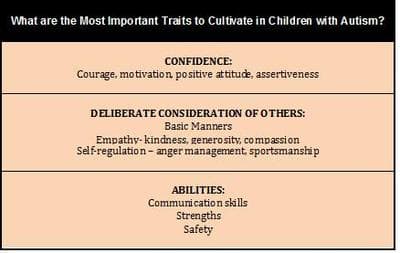
- A big component is giving these kiddos the confidence to believe that goals they set for themselves are attainable. The world is full of success stories about people who couldn’t read, or who suffered horrible hardships or who barely scraped through high school, but they succeeded anyway. Because these individuals believed in themselves, they had the courage to try new things and they persisted until they achieved what they set out to do. And their motivation and positive attitude helped carry them through the rough spots.
- Another component was that these children were taught the social skills they needed to persuade other people to believe in them, too. Basic manners got them in the door. But deliberate consideration of others was believed to be critically important, and needed to be taught since the consideration of others isn’t always instinctive in people on the autism spectrum. Consideration of others fell into two buckets:
1) Empathy, which included compassion, generosity and kindness and
2) self-regulation, which included good sportsmanship and anger management.
- Finally, the children had the ability to fulfill their goals and aspirations. Interestingly enough, abilities weren’t mentioned nearly as often as the confidence and social intelligence factors. What struck me as interesting was that parents tried to leverage a child’s strengths as much as they focused on removing delays. Early one-on-one intervention – e.g. ABA, speech, and language therapy – were very important, but it wasn’t so much the therapy as the therapist who contributed to the child’s learning and future academic success. I also found that the parents themselves were effective therapists by reading to their children and engaging them in educational play.


Disclosure: Autisable.com participates in affiliate programs, including the Amazon Services LLC Associates Program and other affiliate advertising programs. This means we may earn commissions from qualifying purchases at no additional cost to you.
Comments
Join the community to leave a comment.