The Muppets warped my baby's brain?
TheRyanFiles3 min read
This article may contain affiliate links. Learn more
A 2006 Cornell University study makes a good case for the hypothesis that television viewing before age 2 is a likely environmental trigger for autism. The researchers first establish a positive correlation between how much tv kids watch and how much rainfall their communities get, suggesting that if tv is a trigger for autism, there should be more diagnoses of autism in wetter communities than in drier areas. Then they gather various county-level data for Washington, Oregon, and California:
"Employing a variety of tests, we show that in each of the three states (and across all three states when pooled) there is substantial evidence that county autism rates are indeed positively related to county-wide levels of precipitation. In our final set of tests we use California and Pennsylvania data on children born between 1972 and 1989 to show, again consistent with the television as trigger hypothesis, that county autism rates are also positively related to the percentage of households that subscribe to cable television."
They conclude that the more time an already-genetically-predisposed toddler spends processing two-dimensional images during a certain critical period of brain development, the more likely he is to develop autism. Then the researchers offer this final wisdom:
"As a final point, although as discussed our results do not definitively prove that early childhood television watching is an important trigger for autism, we believe our results provide sufficient support for the possibility that until further research can be conducted it might be prudent to act as if it were. In other words, maybe there should be additional emphasis placed on the recommendation of the American Academy of Pediatricians that early childhood television watching should be eliminated or at the very least quite limited (as discussed in footnote 3, the current recommendation is that there should be no television watching before the age of two and no more than one to two hours per day for older children). We see little downside in taking this step and a very large upside if it turns out that television indeed causes autism."
It seems plausible that a baby's visual experiences during that critical period of neurological development would leave a lasting impression. It also seems plausible that time spent indoors, sedentary and surrounded by household toxins, would leave its mark as well. I would love to see further research on this subject. In the mean time, I agree with the researchers: it can't hurt to act as if early childhood tv viewing contributes to the development of autism. No child was ever harmed by watching too little television.
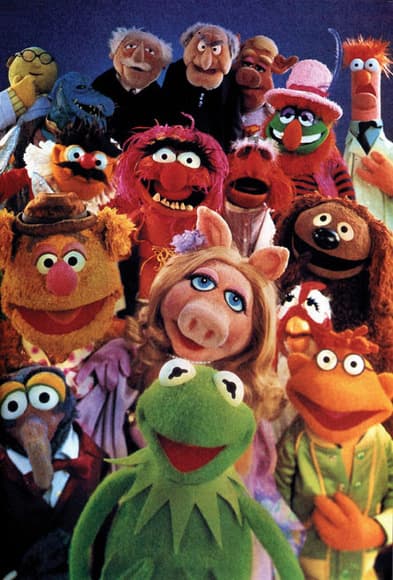
But now, of course, I'm wracking my brain trying to remember how much tv we let Ryan watch as a baby. I don't remember when we introduced Sesame Street, but according to the baby book the names of certain Muppets were in his vocabulary at 16 months. I am a lifelong Jim Henson fan, and at the time I was thrilled to be able to share Sesame Street with my baby. Now, I'm plagued by the fear that I ruined his life - or at least contributed to the warping of his little brain - by letting him watch Sesame Street.
Honestly, I didn't think I was doing anything wrong. But as a mother, it is my instinct to blame myself for my child's challenges. Had I had the slightest idea my baby's brain might have been harmed by watching Cookie Monster, I would never, never have exposed him to that. I'm kicking myself for my own choices, even though I know it's a fruitless exercise. Stu has tried to reassure me by telling me "if this were true, 80% of kids today would be autistic." But Ryan's not 80% of kids - he's my kid. My responsibility. My baby, who has a hard road ahead of him.
And part of me is going to blame myself for this, no matter what anyone tells me.
So, to all parents of newborns: it can't hurt to act like this study actually proved that tv causes autism. Don't risk that Cookie Monster might eat your baby's brain.
T
Article by
TheRyanFiles
My kid is great! And he has PDD-NOS and ADHD (e-i-e-i-o). The apple doesn't fall far from the tree. Watch us navigate the world of neurodiversity at http://notanaffliction.blogspot.com/


Disclosure: Autisable.com participates in affiliate programs, including the Amazon Services LLC Associates Program and other affiliate advertising programs. This means we may earn commissions from qualifying purchases at no additional cost to you.
Comments
Join the community to leave a comment.