Stupid Rules Normal people follow - Part 1 of 5
This article may contain affiliate links. Learn more
[Note: I'm using the word "normal" in this post. Those who are not normal—myself included—should not take offense; I am using this term in the mathematical sense of "near the mean of a normal distribution," as in within one standard deviation of the mean; in the context of cognition another word is "neurotypical," but this is less common and less general, and many people are unfamiliar with its meaning. In the vast majority of possible systems, most will be normal and some will not. It's nearly inevitable. See also Stupid Rule 4, for our fear of being "abnormal" is very much a Stupid Rule.]
Introduction A major part of what makes life difficult for those who are rational, especially those on the autism spectrum, (in the interests of full disclosure: I'm on the near end, just shy of Asperger's Syndrome) is the fact that normal people follow certain rules on most occasions, rules that don't really make sense—but that we all are expected to follow, because otherwise it forces us to confront issues that we feel more comfortable avoiding. They are all stupid rules, rules that are rationally difficult or impossible to justify; but they are universally present and strongly enforced, and we ignore them only at our own peril. Perhaps we ought to challenge them, find the places to attack them that will most weaken their grip upon humanity—but we cannot be sure to win such a fight, and we certainly cannot simply pretend it is already won.
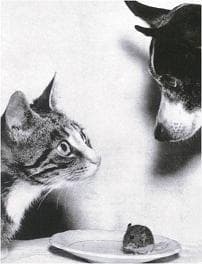
Stupid Rule 1: Animals and their bodies are dirty—especially when it comes to humans. This covers a wide variety of behaviors, from the universal prohibition on nose-picking to the fact that men aren't supposed to talk at urinals. It's also why people don't like to be looked at in the shower, why masturbation is not to be performed in public, why one is expected to chew with the lips closed, and why blood is not an appropriate topic for dinner conversation. Anything that reminds us of our animal nature—bodily substances such as blood, saliva, mucus, entrails, urine, feces, skin, hair; and especially the fundamental forces of animality itself, sex, disease, and death—makes people uncomfortable.
Eating is less troublesome, but not completely immune, and hence there are many strange taboos about eating that vary across cultures. (Consider "Don't put ketchup on your ice cream." It's actually more nutritious that way, so if you like the taste, why not? Because that's not how you do it. It's a taboo.) Sleeping and breathing appear to be exceptions, perhaps because breathing must be done literally constantly and sleeping is similar enough to "clean," non-animal phenomena like nightfall and machine shutdown.


Sex, disease, and death are also somewhat appealing to us, especially sex, for two reasons: We are, in fact, animals, and we have animal drives built into our brains; and most people find things that are forbidden appealing simply because they are forbidden. These may in fact be mutually-reinforcing phenomena: If sex weren't forbidden, would the forbidden still be sexy? Even if it would, would it be as sexy as it is now?
The normal behavior is therefore to avoid these topics whenever possible, but when they do come up—usually in private, or with close friends—to laugh and joke about them in order to defuse the tension. If you ever wondered why everyone giggles during sex education, this is why. It's also why most of the really funny jokes are so-called "dirty jokes," about sex, disease, and death.
Plants and fungi appear to be largely exempt, which is why it's "animals" and not "lifeforms." No one is disgusted or scandalized when we talk about sap, seeds, or spores, but nearly all are when we talk about blood or sperm, even insect blood or horse sperm. Bacteria may also count as "animals" under this rule, or, since people react so strongly to bacteria even when they wouldn't react to animals, they may be a separate Stupid Rule 1A: Bacteria are really, really dirty. And lest you think this latter is rational: Roughly 99% of all bacteria are harmless to humans, and the dominant species of bacteria on Earth is a strain of E. coli that we and most other mammals absolutely need for survival.
Do you think this rule is true?


Disclosure: Autisable.com participates in affiliate programs, including the Amazon Services LLC Associates Program and other affiliate advertising programs. This means we may earn commissions from qualifying purchases at no additional cost to you.
Comments
Join the community to leave a comment.