Stopping Your Autistic Child from Hitting
Guest Submitted Post3 min read
This article may contain affiliate links. Learn more
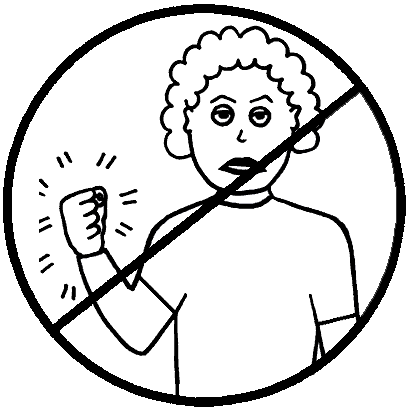
Although autism mainly centers on the inability to effectively communicate (because those with autism do not process or filter information in the same way), a fairly common hallmark of the condition is the additional inability to understand that other people have the same thoughts and feelings as the affected individual. And this often leads to hitting as a method of communicating feelings, getting attention, or protecting a territory. However, hitting is not acceptable behavior in children, and it definitely won’t fly as they grow up, so you need to nip it in the bud now before it becomes a real problem.
You will first want to determine the cause of your child’s actions. If you don’t know what is causing him to act out then you won’t be able to effectively address the bad behavior. Whether your child is hitting siblings, kids at school, or even himself, you need to know what triggers the attacks. Is he upset about other children invading his space (getting too close, taking his toys, etc.)? Or is he frustrated by an inability to communicate thoughts and feelings? Maybe he’s using self-abuse as a method of focusing or “drowning out” other sensory input. If you can’t figure it out on your own, you may want to see a doctor who specializes in autism or behavioral analysis.
Once you have established the cause of your child’s behavior, one method of dealing with it is to enact consequences. If you find that your autistic child is hitting a sibling (this generally occurs during disputes over toys), then you must teach him the consequences of his actions just as you would any other child. Because autistic children are often unable to form a correlation between the pain they feel when they are hit and the pain they are inflicting on others through hitting, it will do no good to appeal to their sympathies or allow the other child to reciprocate as an example. Instead, you may simply have to train them through punishment. So if your kids are fighting over a toy, take the toy away for a period of time. Or if the autistic child is hitting other children for attention, put him in a time out. It may take a while, but eventually, he will learn that hitting equals consequences. When he has finished the punishment, have him apologize so that you know he understands what he did wrong.
If punishment does not garner the desired results, you may want to switch tactics by implementing a rewards system. Try teaching your child an alternative to hitting others when he feels strong emotions. For example, use a designated pillow for hitting in place of a sibling so that he can act out his frustration without hurting anyone. Or teach him to hug instead of hitting (if he is able and willing to do so) so that he receives positive attention instead of negative. If he cannot form these associations, simply teach him to go to his own space, away from others, rather than hitting or acting out. This will at least keep him from hurting other children. Then encourage him when he utilizes his substitute by offering positive attention, praise, or other rewards
-----
Kyle Simpson is a writer for an online MBA rankings website where you can find information on the most popular online MBA programs in the country.

Disclosure: Autisable.com participates in affiliate programs, including the Amazon Services LLC Associates Program and other affiliate advertising programs. This means we may earn commissions from qualifying purchases at no additional cost to you.
Comments
Join the community to leave a comment.