Special Needs Kids and Successful Road Trips
Guest Submitted Post5 min read
This article may contain affiliate links. Learn more
Parents of special needs children must always work harder than most parents even for the simplest things. A road trip, which is fun for most families, is a nightmare to special needs families. How can a special needs family enjoy a road trip without meltdowns and upsets for all passengers? A successful road trip begins long before the departure day. Plan, prepare, and pack carefully so that all chances for a pleasant day are on your side.
However, to be realistic, sometimes no amount of planning can make everything go smoothly. Parents should mentally prepare themselves and their children that IF a hitch in their plans prevents the trip, shortens it, or makes it almost a fiasco, there is always a next time. Everyone must feel that they did their upmost to make it work and that it is NO ONES fault. You are a family and family members forgive, forget and forge ahead.
An alternative to family outings that works well for some families is to take trips separately. Have the special needs child go alone with a parent or both parents while the others are cared for at home. Then on a separate occasion, perhaps when grandma babysits the special needs child, the others have their turn.
Planning Road Trips
You will be surprised how successfully your family can play tourist just a few hours’ drive from your home. Planning is KEY but it needs to be done months ahead of time.
 Where to Stop:
- Gather information, web site addresses, maps, schedules, and order the free handouts most areas have about visiting their sites.
- Download Road Trip apps —GPS, maps, trip help…
- Check the hours of operation of places you want to visit.
- Find out the price breaks, family days, and special perks at the family attractions you will visit.
- Read up on Geocaching in your area. Or check their site here. Geocaching is a great, free family adventure.
- Decide where most of your stops will be and check to make sure you know the addresses to quickly find them.
- Decide where meals will be eaten. If you will be picnicking, know where picnic sites are located.
- Know the location of kid friendly restaurants along your route… for plan B in case of rain.
Where to Stop:
- Visit a farm and pick your own fruit or vegetables for an exercise break.
- Stop at an airport or train terminal for a break, washrooms are clean and whose kids do not love planes and trains!
- Have a family quest for one of your stops. Walk about a small town, park, or rest stop to locate and photograph a list of landmarks you have previously written down… during that valuable preparation time.
- Picnic at a park or road side tables.
- Stop in towns with public playgrounds with swings, slides, and monkey bars.
- Check if companies/manufacturers allow tours of their facilities. One of the best stops our family had was at company making cymbals.
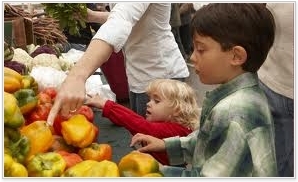
- Locate Farmers’ Markets and walk about choosing fresh fruit, vegetables, fresh bread, and cheese for a healthy snack.
- Use games, songs, mind games, guessing games, storytelling, and other easy activities to make the miles pass quickly.
- Play detective and learn about your provinces or states by checking the license plates and listing them where they are from. Better still add math to the mix and make bar graphs to show your data. A map of your country to find each place is a wonderful geography lesson.
- Have a kid friendly road map (or each one) so they can follow along and really know “are we there yet?”
- Have small notebooks with unlined paper for each child to make a trip-journal. After each stop and along the way announce “Journal writing/drawing times”. Motivate them with the promise of photos of your day that they will add when you return home.
- Sing your way to the next stop. Get CD’s of scout camp songs, campfire songs, day camp songs, and marching songs with lots of repetition so kids can join along in minutes.
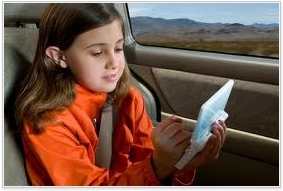
- Bring hand held video games.
- Have a flat surface for each child, pencils, crayons, and markers for drawing, coloring, and filling in activity books with “pencil games”.
- Have individual magnetic games, packs of playing cards, string for Cats Cradle or String Loops, and fidgets for quiet time.
- Provide earphones, favourite music, audio books … for your sensitive child if the above activities are not suitable.

Disclosure: Autisable.com participates in affiliate programs, including the Amazon Services LLC Associates Program and other affiliate advertising programs. This means we may earn commissions from qualifying purchases at no additional cost to you.
Comments
Join the community to leave a comment.