nonverbal, verbose, potato, potahto
This article may contain affiliate links. Learn more
I've started attempting to share my journey into understanding and using communication to my psychologist. I grew up epic fail at communicating ideas and feelings, failing to interact well with others, misunderstanding their needs interacting with me. Social skills are definitely not my forte.
I've always been verbal and able to respond, but from the gitgo, I was that difficult child who always seemed to do things backward or wrong. Even if I understood the dynamics of what to do, I couldn't follow the emotional dynamics of the instruction communicator once emotions became involved, and there's nothing like frustration to really tangle up a set of instructions. Adults who repeated themselves often started chopping off parts of previously said sentences, not realizing those might be the most important parts to what I was missing, so disaster followed me around in very facepalm ways. But I thought you *didn't* want me to... oh, well. By the time someone was yelling, yes, I would follow those chopped up instructions exactly.
THIS IS WHY ROBOTS WILL KILL THE HUMAN RACE. It's not their faults. Y'all need to listen to yourselves talk sometime...
I was in college when I finally learned communication SCIENCE. The process of words between people is beautifully expressed as an irreversible algebraic function, and you can add all kinds of variables. I didn't learn this in communication class so much as plug in what I learned in algebra to the idea that once something is said and added to, those are irreversible parts of communicating and must be taken into account in order to move forward. When I saw that combination of concepts blaze across my brain, I was finally at a place to start communicating "I need", "I like", "I want". I was in my 30s before I realized how vitally important it is to say "Thank you" to my spouse and be emotionally cognizant of people around me. It's not so much a matter of being functional for each other, but of helping us feel good about being with each other.


I'm the sort who can easily break down communication at any level and see it in my mind as logic trails, like the way people program robots with flow charts, simply put.
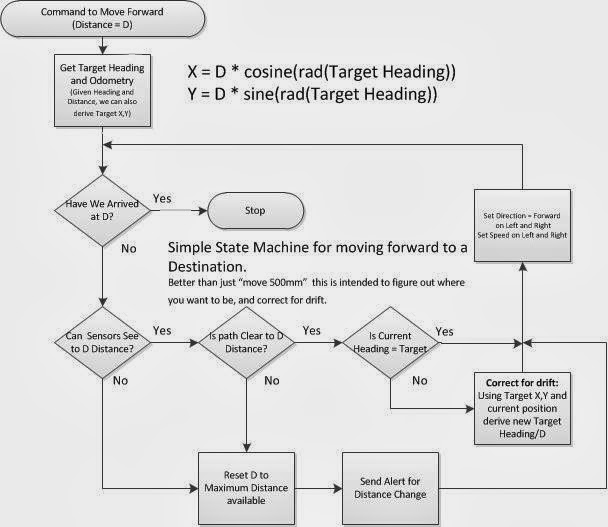
Because I see communication that way in my mind, I can easily find where a convo goes off track and try to reset someone I'm talking to back to a point where we can start over and move on. However, other people's heads don't work that way at all. I didn't know this as a child. I would try and try to steer someone back to a very particular part of the convo where we'd need to start over in order to understand something between us, but most other people get super tangled up and very emotional when someone tries to do that. They don't understand from their POV what is even going on, no matter how it's explained.
So I lived most of my life frustrated at others' frustrations over me not getting things while I quash my own frustrations over them not getting things, either, and even learned to master the art of avoiding the pitfalls they couldn't see were coming. I'm getting good at steering people clear of misunderstanding me when I'm paying attention. Sadly, I start zoning out fairly early on because communication is 'boring', and so it's easier to just stop talking most of the time. I keep it really simple, using little cues I'm able to pick up to interject questions and therefore keep the other person talking so we last longer without getting frustrated. But because of this, many people around me rarely know how I'm feeling or what I'm thinking.
One of my best examples of someone not knowing what's in my aspienado head is that Scott and I were married for 15 years before I felt he was finally ready to understand (and I was finally able to verbalize better) what I gave up when I quit my advanced degree program to stay home and be a good mom for his kid without us getting into a fight about it because of misunderstandings and feelings. I am that patient. By then there was no emotion from me, no malice or bitterness, no regrets or wistlessness. Just information. Yes, I gave up what could have eventually turned into a multimillion dollar project that would have set me for life, and I accepted that because it was my choice, but it wasn't a choice I discussed with my husband before I made it. Just because I'm autism spectrum doesn't mean I don't have a clue what love and commitment are, but I did understand back then that no matter how I tried to share it, neither of us would have been able to talk about it without melting down into something emotional, mostly because we were young and beset with too much input from other people. The idea that I'd value a second marriage above becoming a multimillionaire isn't something I find astounding, because logic also extends to satisfaction levels. I needed Scott in my life. Despite his full blown ADHD, he's the most patient person with me that I've ever met, even when he's frustrated. He has NEVER left me, no matter how much he has felt like it sometimes. I see far too many lonely people online wishing they had someone like that, so I know how valuable this relationship is, no matter how I feel at any given moment. How I feel is transient, chemical, and usually brought upon myself. I can't even imagine humans creating robots to 'feel' and not understanding this themselves.
The people around me cannot see what is in my head. I cannot get it out to share. It has taken me decades to learn how to express what I can see and how it works in here, and now I'm practicing doing that out loud on my psychologist. Part of my path is this blog post. This is part of my map through the jungle. It's ok if you don't get it or even like what you see. Not everyone enjoys this kind of stuff, but the people who do enjoy it are making really cool things for your lives, like cell phones and games and TV and stuff. Awesome.
So the question is- how did I figure it out? The first part up there was the key that opened the door, that communication is an irreversible function. Over several years other things started falling into place. Another key is the idea that socializing is a game. Once I figured out how the game works, I was able to play it better. There are bits I used to dismiss as useless and irrelevant that I didn't see were vital to 'start up'. Most convos begin with a start up routine. This routine must be engaged before one successfully continues to discussion. Aspies like jumping straight to discussion, kind of like R2D2 plugging into a wall socket (I so love when I can do that!), but other people feel more comfortable with some variable of hello-how are you-cool shirt/nice shoes/insert noticing something here- eye contact and a smile- let's get a coffee / won't you sit down / come in I'm making cookies / insert invitation to join here- you see what I mean. I've always assumed all that stuff is a given and I can skip those steps and jump straight into convo, but that dismisses the human in front of me. If I skip those steps, that person feels awkward and used. I didn't even think about that for years.
So seeing communication as an irreversible function and then as a game were real eye openers for me. I can game my way through convos now, and I can gauge my success by the way we part. I won't go into the disengage routine here.
Believe it or not, the science of chaos was one of the big ice breakers for me, and it began with understanding some of the things in that video I put at the top of this post. Please notice that the whole reason that entire video started was over communication problems between computers over a wire service, so this is communication about communication servicing communication. Aaaand I just metaphorically mandelbrot'd an idea about communication. I could koch curve it with lots of little inserts that jaunt off into multiple meanings, but then I'd lose most of you. Heads up, I think I'm being cute with words here, and I know it's failing, but I think it's fun anyway.
Chaos is exactly what humans are to me. Everything in my childhood felt chaotic, not making sense. Cause and effect are not always easy to see with human communication, and it took me a long time to learn cause and effect anyway, so let's just blame that on leaps of thought for now. But the secret in the science of chaos is that there are inherent patterns even in the midst of wild chaos, and human behavior is no different. I have a sociology degree and was deeply into Asimov's trilogy about psychohistory. Douglas Adams also played with human predictability in his Dirk Gently series (the books, which I adore), and all through his Hitchhiker's Guide series.
Imagine a person like me working on a sociology degree intersecting interpersonally with a mathematician working on an advanced degree in topology and having convos about whether human predictability was a real science or a mockery. Back then I wasn't able to discuss anything very well. If I had been, I imagine we'd still be a thing, or at least still in touch, and I sometimes still feel sad about that.
So. Now we are building a list.
- Communication is an irreversible process,
- a game that can be manipulated and played well,
- and predictable. That is crucial. If one can learn the predictability of behaviors and responses, one can begin to understand what the patterns are in the chaos of communication. Behaviors and responses rest on how one's day really is going, how one's meal is not settling or hasn't arrived yet, how one might be worn out from a long day or a virus. Communication must bend around lots and lots of variables in order to be successful. It's not as simple as plugging into a wall socket and exchanging information.
That still didn't give me enough to work with for good communication, but I started applying as much of my new knowledge as I could when I could with fairly sweet results, for the most part. And then everything went horribly wrong...
Schematics in my mind weren't a good substitute for the inherent intuition that others are born with. I was still bypassing far too much, not realizing my coping skills were affecting my own communication efforts. I had been taught all my life to hide my flaws and 'perform', so playing the social game amounted to playing a game of masks. That isn't a very good way to keep friends. I would keep up a dialogue that I thought sufficient for interchange, possibly equal to the amounts of whatever I got incoming also outgoing, which meant convos turned into competitions. I really had no idea that's what I was doing, and I grew very annoyed at it when I realized that's how it felt. All I had to do was step out of my own routine and acknowledge someone without the reciprocal balance of give and take. I could have had a very good lifelong friendship with a real person on my own street if I had realized this simple thing. The dynamics were puzzling, and I was given every chance to respond to some very real reaching out. I can look back now and see how valuable I could have been as a person in someone's life, and this person probably never understood how valuable they were in mine, because I didn't understand that reciprocal give and take isn't the way we play the communication game.
I see now that I was far from reciprocating. I matched content. I didn't validate or 'hear'. I misinterpreted attempts at real connection because I didn't understand what connecting IS. Connecting in simplest terms for aspienado is like electron flow. It's the point where exchange can flow, and exchange is genuine caring. Being friends and communicating isn't about spending time and back and forth exchange, it's about connecting. It may have nothing at all to do with the content, but feeling like that content was heard.
I understood none of this until that friend was long gone. A lot of my sadness was about not feeling heard myself, but I'm pretty sure now that I was heard very clearly and couldn't see that because I was so lacking the ability to connect socially, to appreciate and exchange genuine feelings, whether or not content was shared. I can see now I was a dismal failure at being what another person needed as part of a support network- a friend.
- Irreversible process,
- gaming,
- predicting,
- connecting...
By this time I was 40 years old and close to giving up on ever having a friend.
By the way, Lexx fans, have any of you noticed (watch the videos) that the Lexx is a character representation of Mandelbrot's all-inclusive Julia set equation?


Ok, now we're arriving to the weird place where I was nearly ready for my whole world to flip me upside down.
Connectivity is energy flow. We already think of emotions in those terms. Sometimes interaction can be a real drag, other times it can sparkle. Words we use to describe interactions and particularly conversations involve words that also apply to energy flow. "I am on fire!" "The conversation was electric." "The party was hopping." "Class was stultifying." You could play with this all day.
I had become a rogue dipping in and out of internet convos for quick exchange, not really connecting. Once in awhile I'd spend more time talking somewhere, but not usually for purposes to get to know anyone. When others wanted to get to know me, they either quickly dropped by the wayside or clung on parasitically. I was very used to this, having been in and out of fandoms for years. Not much of it phased me, most of it irked me, and I was just as bad as everyone else to hit and run.
A TV show changed all that. Because it caught my attention so hard, I went down a really big rabbit hole going after everything I could find about it, and along the way ran into other real people doing the same thing. I did my usual blitzing in and out of forums, leaving comments in guest books, and then something changed, basically, blogging became a thing. I made my first couple of blogs, wrote a few feelings about the show, and the first contacts started. I increased my content output, drew more interaction, and so forth. Back then I was very green, and right on the cusp of super fail. 2004 was the year my world crashed into darkness, years of illness and grief, and everything from there was me split into two- the me in a mask online and the me behind the mask trying to keep up. I didn't realize this for four years. During those four years I slogged through mental sludge akin to the kinds of mental loss that people go through after brain injuries from strokes or car accidents, although there was no sign of damage. I lost math and spacetime orientation, became dyslexic, suffered short term memory deficits, and long term memory jumbles. I could no longer hide being autism spectrum, like I'd been taught from childhood. I also plummeted physically to the point of wondering if I'd lose both hearing and vision, and finally had to quit work for good as my health crumbled even more into needing help with self care. I could no longer put on my own shoes and socks, needed help shopping and bathing, and even had to stop driving for awhile.
During this time, I hung on as hard as I could to the only thing I could still seem to do- construct sentences. I very slowly built a fan blog for that TV show and spent a laborious amount of time creating a little bit of content for it. I credit that obsession with keeping me out of the kind of self destructive depression that would have been horrible for my family.
And during THAT, there was a person that talked to me nearly every day. Not the usual parasitic follower I had become accustomed to. Not a needy person needing attention. Not one of the 'crazies' in a raging fandom. No, an actual, real person was talking to me, on the side, about real life, about hopes and dreams and real thoughts about story content...
I was on the brink of understanding relationship connectivity. I was so close to grasping what I need to do to be someone's friend, but sadly doing it through crushing loss and disability. I tried to keep it all separated, but it was like steering my spaceship through a violent asteroid field during battle while trying to text, to borrow what at that time would be a futuristic visual. My kind of contact was like emotional hit and miss because I was working so hard to hide all the distortion I was filtering and fighting through just to be able to chat a bit. It never occurred to me to be honest. I was so used to a lifetime of being pressured (forced) to hide my autism challenges and then years of internet masking to avoid real people showing up at my house (it happened) that I couldn't see I wasn't making myself emotionally available. The friend eventually slipped away and over several very sad years I finally realized THAT was it.
AVAILABILITY. Let's add that to the list!!!!
- Irreversible process,
- gaming,
- predicting,
- connecting,
- availability...
I have spent the last several years practicing on being emotionally available for others. It's like learning fancy dance steps for a cotillion. I like it. And as I'm learning this part, I can now see where and why others are afraid of learning this. People can be pretty mean. *I* used to be pretty mean! I can look back now and see that when I thought I was being my cleverest or wittiest, I was actually being quite mean.
I didn't have an empathetic bone in my body for many years, and I don't think it's necessarily because I was incapable of it as much as I was raised by someone who didn't understand even the basics of it. My dad wasn't intentionally cruel, just extremely practical. My mom's overwhelming feelings were like a silly string hitting a boulder. I grew up without empathy, never felt forgiven for being a problem child or understood as a person, closed myself off from everyone most of my life so no one could hurt me (that's a great way to wind up hurting oneself instead), and pretty much the only way I learned empathy was over many years of very slowly waking up through my own children and learning to see from their eyes and my mother's eyes simultaneously. My children are natural caretakers. I have no idea how I missed all that when it was my turn, except that I was so terribly deficit at being emotionally available, I just didn't know how.
I'm a natural problem solver, and my biggest problems in life have always been social. I can feel what I need- stability, validation, mutual support, stuff like that. It took me awhile to figure out how to get those. You can't shortcut and force it. Just getting married to someone doesn't do the trick. It's an internal journey, and journeys must align for that kind of bonding.
Somehow, my journey aligned. I could see and feel that I'd had what I needed, but I was at a loss how to have kept it. If I'd been more emotionally available, a lot of those lost feelings would never have happened. I had spurned emotional attachments most of my life, but deep down I know I need them or it feels like I'm dying inside. Humans are natural bonders, we bond with nearly anything that moves, even plants and places. We 'own' our loves, take what we need into our souls. We don't just abide alongside, we deeply entangle ourselves with someone, something, anything. Hobbies or games if nothing else. We need that emotional attachment to be healthy.
So that's where I'm at in this journey now. I'm sure there is more to come. I wanted to share my perspective on the importance of learning to communicate well from my own point of view. It's not just about pouring out my soul, dumping my day, splatting my feelings (or hiding them). It's about realizing that everything I've ever said to a person is still inside them painting a picture of me, that I have the power to enhance that picture, that I can imagine how the next brush stroke will go, that I can help hold the brush, and that we can both feel good about that.
Yes, it's complicated and it's hard. That looks intense even to natural instinctuals, right? But imagine growing up with a deficit and none of that comes naturally at all. It's kind of like a Beauty and the Beast scenario, I guess. Both sides must figure out how to come together into a bonding friendship.
I need to be done with this, it's been a bit consuming, lol. Aspienado touching down and blowing stuff around...
This is extra thinking if you're in the mood- basics for colorizing a mandelbrot. About 11 minutes in we arrive at a sweet communication function visual, continue from there so see 'attraction' splitting into a group convo, if you will (minute 13 on is fabulous). It's idealized, but that's how I 'see' communication. I think Asimov would've had a ball with twitter trend prediction.


Disclosure: Autisable.com participates in affiliate programs, including the Amazon Services LLC Associates Program and other affiliate advertising programs. This means we may earn commissions from qualifying purchases at no additional cost to you.
Comments
Join the community to leave a comment.