Is anorexia nervosa the “female form of Asperger’s?”
This article may contain affiliate links. Learn more
Name two medical conditions that have increased in prevalence and media coverage over the last decade, pose many unanswered questions, and scare the hell out of parents. I’ll give you a hint: they both begin with the letter A.
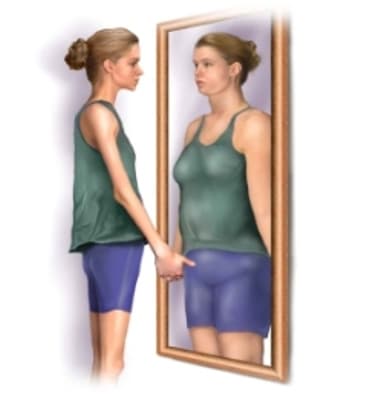
Anorexia nervosa – an eating disorder characterized by self-starvation and distorted body image – and Asperger’s syndrome – an autism spectrum disorder characterized by difficulties in social interaction, restricted and repetitive patterns of behavior and interests, and preserved linguistic and cognitive development – are being observed under the same diagnostic microscopes. The findings have shocked both the medical and psychological fields.
Remember the whole Nature vs. Nurture debate you learned about in high school science textbooks? Well, recent studies are suggesting a new approach to the debacle: a compromise.
A Swedish study (2002), an Australian study (2004), and an Israeli study (2006) have concluded that the main risk factors for autism arise during the perinatal period, which spans five months before and one month after birth. Autism was more prevalent in children whose births were induced; who were born with a low Apgar score (numerical summary of infant’s condition at birth); and who had experienced fetal distress, c-section, and/or other birth complications. Pre-natal distinctions – such as head circumference maternal diabetes, being a twin, or season of birth – and post-natal characteristics – vaccinations or bottle vs. breast feeding – did not show the significant effects on risk of autism that the perinatal conditions did.



Numerous studies have also included that the development of anorexia nervosa, like autism, is most likely related to perinatal conditions and complications. A large Swedish study (1999), which assessed the birth records of all girls born in Sweden from 1973 to 1984 and of the 781 girls between the ages of 10 and 21 who were hospitalized due to anorexia nervosa, concluded that forceps (tong-like instruments used to grasp the baby’s head) and ventouse (vacuum device) deliveries were noteworthy risk factors for anorexia. A cephalohematoma (collection of blood under the scalp of a newborn) at birth was the most significant risk factor. These factors all take place in the perinatal period. An Italian retrospective study (2006) showed results that were consistent with those of the Swedish study: anorexia nervosa and obstetric complications in the perinatal period showed significant correlations.
Oxytocin – a hormone involved in social recognition, bonding, sexual arousal and reproductive behaviors, release of stress and anxiety, and formation of trust between people – is known to be low in sufferers of both anorexia and autism. Many researchers suggest that this similarity is not a coincidence and again point to the perinatal period, a time when the oxytocin system is challenged and matured.
The “perinatal complication” comparison is not the only similarity between the two conditions. In 2007, Asperger’s syndrome expert Tony Attwood reported that between 18% and 23% of teenage anorexics meet some or all of the diagnostic criteria for Asperger’s syndrome. Dr. Janet Treasure, a researcher who specializes in eating disorders, stated “People with eating disorders find it difficult to change self-set rules… They also see the world in close-up detail, but this can be at the cost of having an ability to see and think about self-identity and connections with others… We also discovered that this distorted pattern of processing information has a strong similarity to autistic spectrums.”
Similar symptoms of anorexia and autistic spectrum disorders include:
- Fixation on detail; becoming distracted; missing the big picture
- Obsessive or compulsive behavior
- A need for perfection
- Difficulty with multitasking or switching between tasks or ideas
- Lack of flexibility in thoughts and responses; difficulty in coping with change
- Atypical eating behaviors (food preparation routines; refusing to eat certain foods)
- In some cases, ritualized or extreme exercise regimens
Some researchers are skeptic, others are completely convinced, and some don’t know what to think at all. Is anorexia nervosa the “female form of Asperger’s?” Or are researchers and psychotherapists over-analyzing in a desperate attempt to answer the unanswerable? It seems that the Nature vs. Nurture debate has new company.



Disclosure: Autisable.com participates in affiliate programs, including the Amazon Services LLC Associates Program and other affiliate advertising programs. This means we may earn commissions from qualifying purchases at no additional cost to you.
Comments
Join the community to leave a comment.