How Visual Schedules Help Children with Autism Thrive

This article may contain affiliate links. Learn more
You have told your child the plan for today three times already, and they are still asking "what are we doing next?" every five minutes. Or maybe they are not asking at all. Maybe they are just melting down at every transition because the next thing always feels like a surprise, even when you warned them verbally two minutes ago.
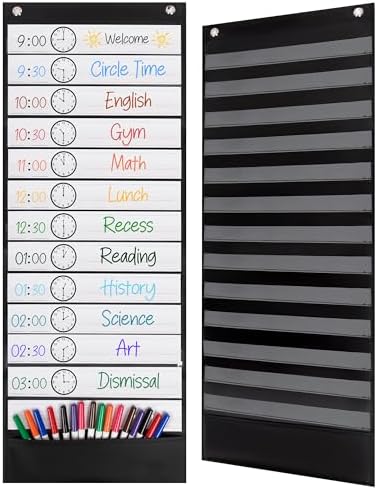
Here is what most parents do not realize: for many autistic children, verbal instructions vanish the moment you finish speaking. But a picture on a wall stays. Visual schedules work because they turn invisible words into something your child can see, touch, and check whenever they need reassurance.
Why Visual Schedules Work
Children with autism often process visual information more effectively than verbal instructions. A visual schedule takes abstract concepts like time and sequence and makes them concrete and understandable.
When a child can see their day laid out in front of them, they feel more in control. This sense of control directly reduces anxiety and meltdowns that often come from unexpected transitions.


Key Benefits
Reduced Anxiety: Knowing what comes next eliminates the fear of the unknown.
Increased Independence: Children can check their schedule themselves instead of constantly asking "what's next?"
Smoother Transitions: Moving between activities becomes easier when it's visually anticipated.
Improved Communication: Schedules give children and parents a shared reference point.
How to Get Started
Start simple. Pick one routine, like your morning routine, and create a visual sequence with 3-5 steps. Use clear images that your child can easily recognize.
Be consistent. Use the schedule at the same time each day until it becomes second nature.
Celebrate progress. When your child follows a step independently, acknowledge it. Small wins build confidence.
.png)
Making It Personal
Every child is different. Some respond better to photographs, others to simple illustrations. Some need very detailed steps, while others do better with broader categories.
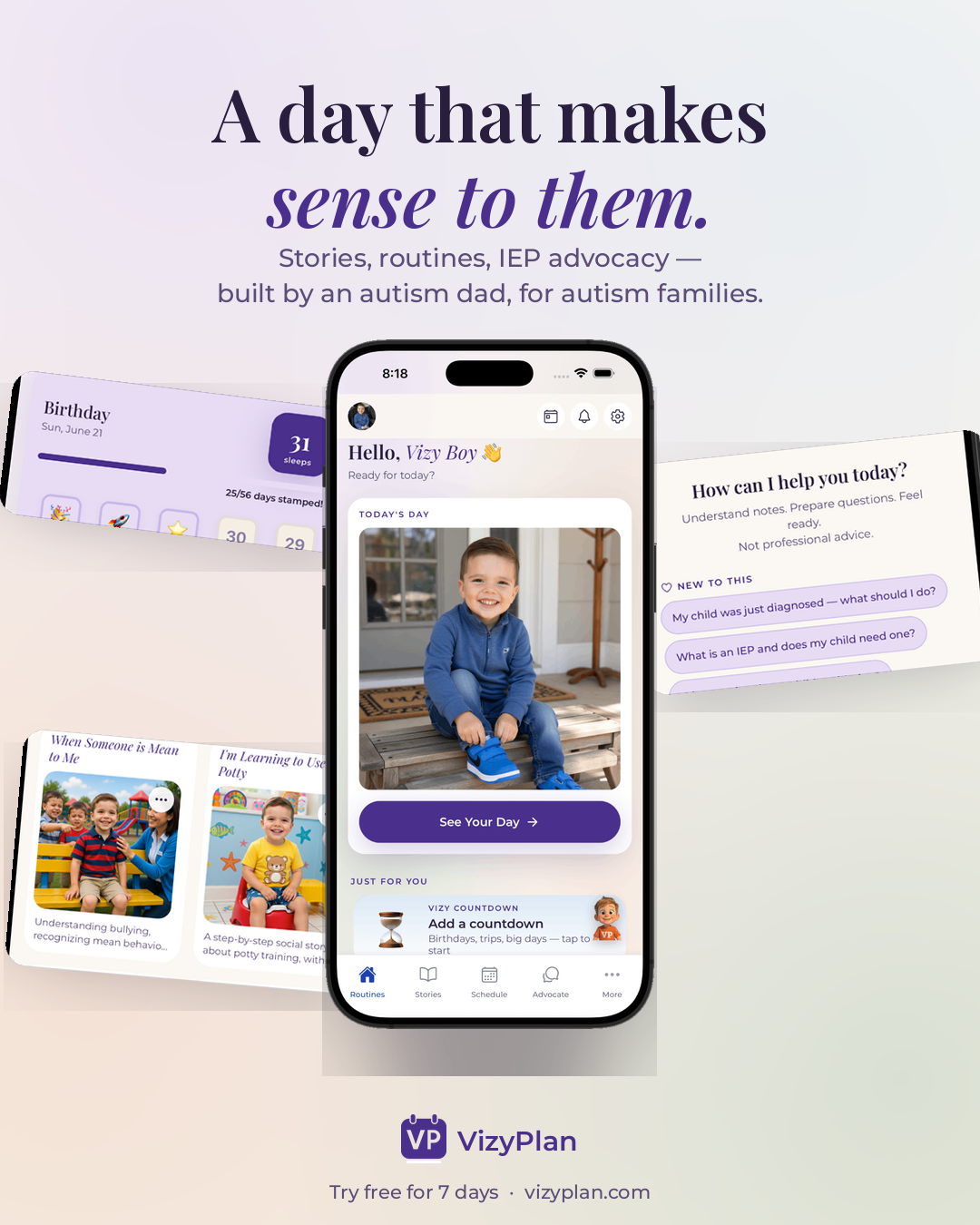
VizyPlan was built to make this personalization easy. You can create custom visual routines with AI-generated images tailored to your child's needs and preferences.
Your browser does not support embedded video.
The Long-Term Impact
Families who consistently use visual schedules often see improvements that extend far beyond daily routines. Children develop better time management skills, increased flexibility, and greater confidence in navigating new situations.
The investment in visual supports today pays dividends for years to come.
Ready to create visual schedules for your child? Start your free trial of VizyPlan and see the difference visual clarity can make. Try VizyPlan free for 7 days
This post was originally published elsewhere. Read the original post →

Article by
Justin Bowman
VizyPlan was created by a father who was frustrated by scattered tools and systems that added stress instead of reducing it. He built what his family needed: a simple way to help his family navigate each day with confidence. For more information, check out https://vizyplan.com


Disclosure: Autisable.com participates in affiliate programs, including the Amazon Services LLC Associates Program and other affiliate advertising programs. This means we may earn commissions from qualifying purchases at no additional cost to you.
Comments
Join the community to leave a comment.