First-Then Boards: A Complete Guide for Parents
This article may contain affiliate links. Learn more
"Put your shoes on and THEN we can go to the park." You have said it clearly. Your child heard you. But five minutes later they are still sitting on the floor, shoeless, because the connection between "do this boring thing" and "get this fun thing" did not stick. The words evaporated before the motivation could form.
A First-Then board takes that invisible verbal promise and makes it real. Two pictures, side by side: what they need to do, and what they get after. It sounds almost too simple to work, but for neurodivergent children, seeing the payoff changes everything.
What is a First-Then Board?
A First-Then board shows two things: what the child needs to do FIRST, and what happens THEN (usually something preferred or rewarding).
For example:

FIRST: Brush teeth → THEN: Story time
FIRST: Homework → THEN: iPad time
FIRST: Get dressed → THEN: Breakfast
Your browser does not support embedded video.
Why They Work
First-Then boards work because they:
Create Clear Expectations: The child knows exactly what's expected before they get what they want.
Build Motivation: Seeing the reward helps children push through less preferred tasks.
Reduce Power Struggles: It's not you versus your child, it's simply how things work.
Support Language Development: The structure reinforces sequencing concepts.
Tips for Success
Keep it Simple: Only show two items at a time. More than that defeats the purpose.


Use Real Motivators: The "Then" needs to be something your child genuinely wants.
Be Consistent: Follow through every time. If they do the First, they get the Then.
Make it Visual: Use pictures, not just words. Photos of actual items often work best.
.png)
Common Mistakes to Avoid
Don't use First-Then boards as punishment. They should feel like a helpful structure, not a threat.
Don't make the "First" too overwhelming. Break big tasks into smaller First-Then sequences if needed.
Don't forget to fade support over time. As children internalize the routine, they'll need the visual less.
When to Use First-Then Boards
They're particularly helpful for:
Non-preferred activities (chores, homework, hygiene)
Transitions between activities
New or challenging situations
Building independence
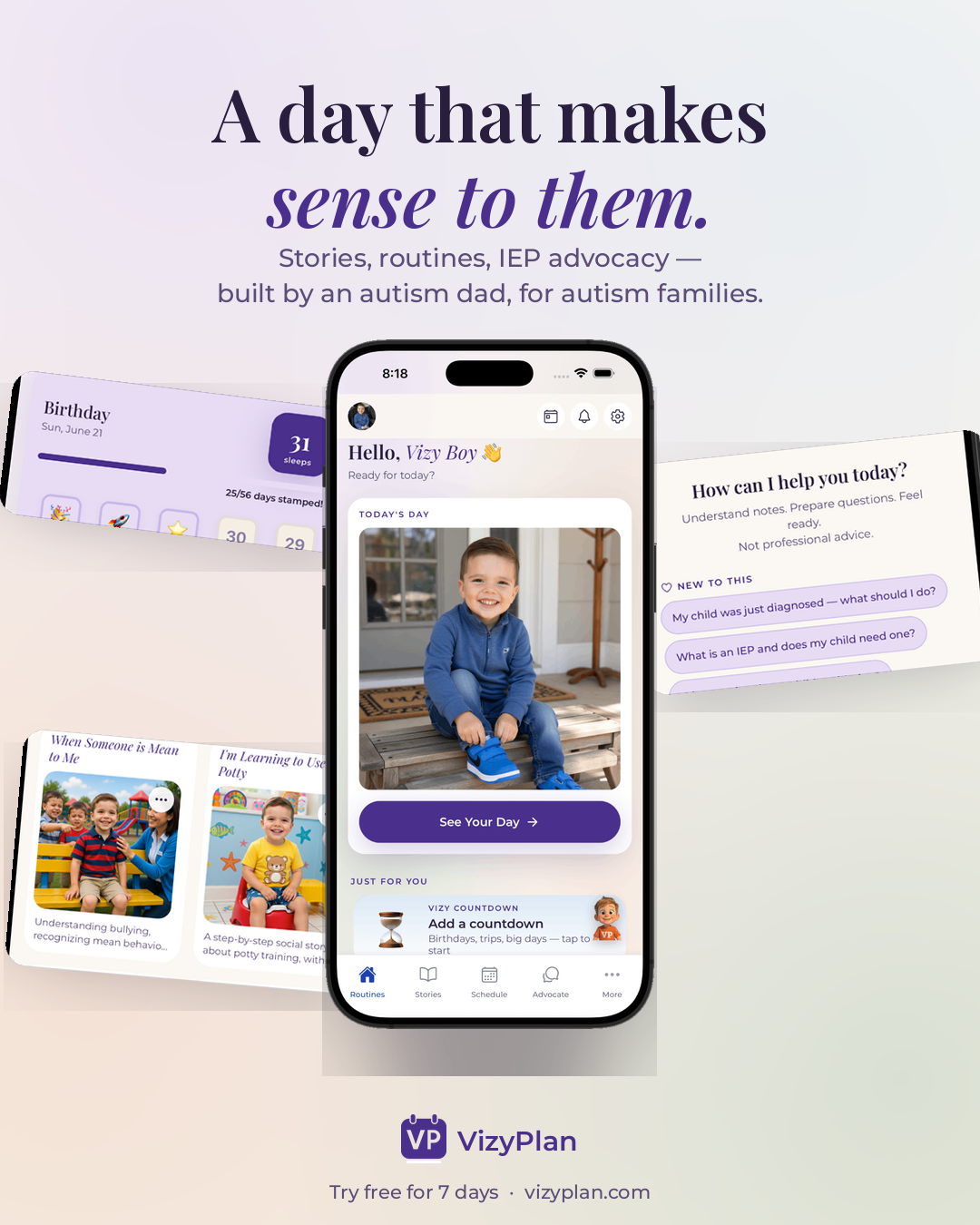
VizyPlan makes creating First-Then boards easy with customizable visuals. Try it free and see how visual structure can transform your daily routines.
This post was originally published elsewhere. Read the original post →

Article by
Justin Bowman
VizyPlan was created by a father who was frustrated by scattered tools and systems that added stress instead of reducing it. He built what his family needed: a simple way to help his family navigate each day with confidence. For more information, check out https://vizyplan.com

Disclosure: Autisable.com participates in affiliate programs, including the Amazon Services LLC Associates Program and other affiliate advertising programs. This means we may earn commissions from qualifying purchases at no additional cost to you.
Comments
Join the community to leave a comment.