Addressing the Person, Not the Disorder
Guest Submitted Post2 min read
This article may contain affiliate links. Learn more
Disabilities and special needs are such a fascinating category. The range of mental and physical disorders is absolutely mind-blowing. From ADD to cerebral palsy to tourette syndrome to down syndrome to bipolar to autism to birth defects - each with their own spectrum of problems.
When I was working at camp, they taught us to always address the child first, not the disorder. For example, rather than saying, "the autistic child, Jimmy," say instead, "Jimmy, who has autism." It may not seem like much, but just by doing this, an entire thought process is turned around. Rather than the disorder having Jimmy, Jimmy is a boy, like "normal" (Ye Gods, I hate that word, but I don't know of a better one) children who happens to have a disorder.
It's something that I think a lot of people, myself included, take for granted in the way we think. We a person with a disability or some kind of handicap and assume they need help - because we forget that there's a person that is living with that handicap. People are not their disabilities, they are people that happen to have disabilities. Besides, since these people have been living with what we would consider a disability, some for all their lives, they have probably adapted in some way.
This was cemented for me today, very, very well.
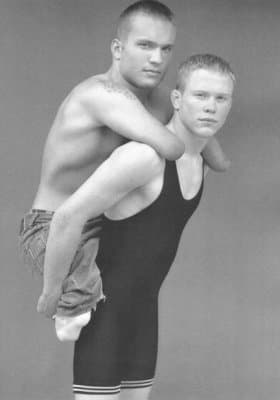
I was at work - I'm always at work - when a man came through my line. He was mildly disfigured around the face, it looked like a birth defect of some sort. I didn't think anything of it, it really wasn't that strange. However, when he took out his credit card, what I almost didn't notice was his hands. He only had one actual finger on one hand, his other hand was all palm. This wasn't what amazed me. What amazed me was the way he handled his credit card, the way he signed the machine, the way he was able to manipulate his hands with such deft that I almost didn't notice he only had one finger.
I really wanted to say something, but I wasn't sure how to do so without being awkward. It wasn't weird, to me, it was fascinating. His hands were obviously not a disability to him, they were just his hands. Are we disabled in relation to spiders, because they have 8 limbs and we only have 4? It's not even comparable. If we grew up, all of us, with only one finger we'd learn to adapt as well.
Disability, disability, what's in a disability?

Disclosure: Autisable.com participates in affiliate programs, including the Amazon Services LLC Associates Program and other affiliate advertising programs. This means we may earn commissions from qualifying purchases at no additional cost to you.
Comments
Join the community to leave a comment.