How to Create an “About Me” Brochure for Your Exceptional Needs Child’s Teacher or Other Caregivers
This article may contain affiliate links. Learn more
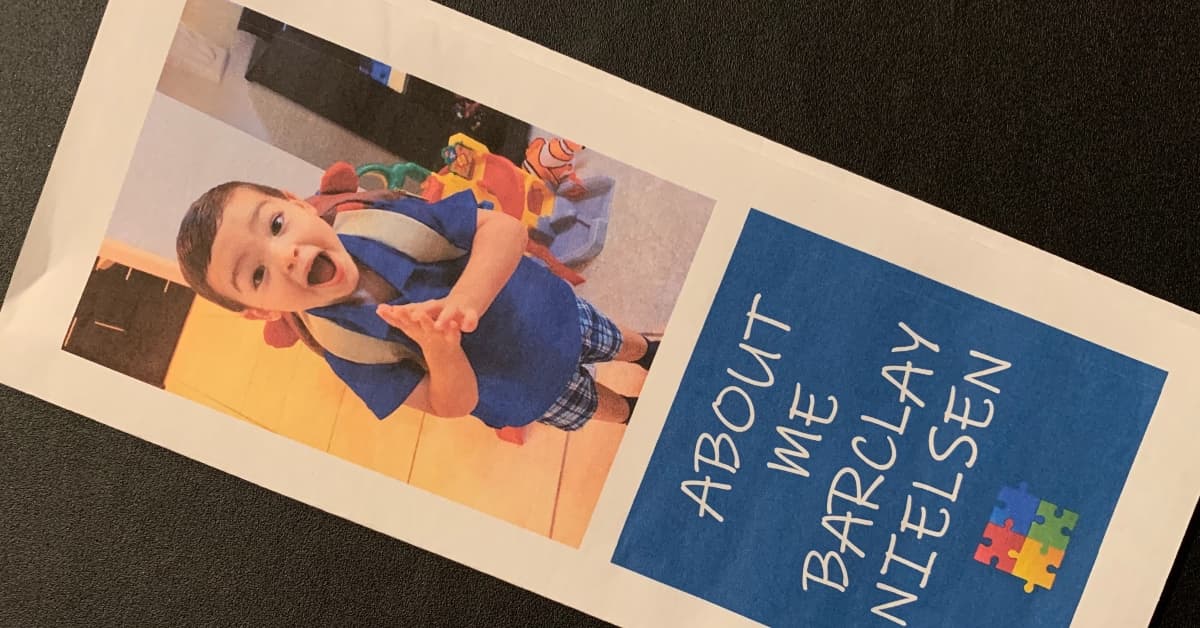
If you have a child with exceptional needs, such as Autism Spectrum Disorder, and they are attending school, daycare, therapy, or spend time with a sitter, it’s a good idea to send a personalized “About Me” brochure to those caregivers. An “About Me” brochure is a brief, tri-fold document that gives very basic, yet detailed information about your child that caregivers can access quickly. Because many of our children with exceptional needs may struggle to communicate, an “About Me” brochure is the perfect tool for you to be able to speak on their behalf.
An “About Me” brochure is personalized for each child, but some elements you might want to consider including are:
- Who Am I? – This is a section where you’d write a short paragraph about your child’s unique strengths and challenges.
- Medications – If your child takes any medications (even not when at school), it is important any teachers or caregivers are aware. List medication names, dosages, and times taken.
- What I Like – Here list things your child enjoys. This section can become an excellent tool for helping teachers and caregivers choose reinforcers and rewards for your child.
- What I Don’t Like – This is especially important. Consider putting in this section things such as sensory aversions.
- What I Eat – Children with exceptional needs may struggle in this area. Many have food aversions to temperatures, textures, and tastes. Also, some children may have food allergies. More so, some children may have difficulty opening packages, using utensils, and staying focused on mealtime and need more adult assistance. It is important teachers and caregivers know how to help.
- Ways to Get Me to Comply – This section is for the tools that work best with helping your child comply with the demands of teachers and caregivers. For example, some exceptional children may be impacted by behavior or communication challenges. For teachers and caregivers to know the best strategies to help them complete tasks can be a huge help. So here include those strategies. Does your child use a visual schedule, a timer, or have success with First/Then or Choices? Be very specific but make the strategies simple to understand. See the template below for suggestions.
- About My Family – Here, you can list the occupation of yourself and your significant other as well as your hobbies. In addition, this is where you’ll include information about siblings and pets.
- Contact Information – Lastly, this section is for you to list the contact information of yourself and significant other.
Although the important information about your child may differ from the suggestions, the template below can at least give you a starting point. Just remember, the more the caregivers working with your child know about them, the more they will be able to interact with them positively and effectively.
Every child is different. Every child responds in a different way. – David Fincher
This post was originally published elsewhere. Read the original post →
Article by
Amy Nielsen
My name is Amy Nielsen and I am the owner and creator of the https://bigabilities.com/ blog and podcast as well as Parent Advocate and Early Intervention Specialist for Collaborative Corner for Exceptional Children. Most importantly I am the mother of four amazing children, the youngest is on the Autism Spectrum and has ADHD.

Disclosure: Autisable.com participates in affiliate programs, including the Amazon Services LLC Associates Program and other affiliate advertising programs. This means we may earn commissions from qualifying purchases at no additional cost to you.
Comments
Join the community to leave a comment.